How AI Is Changing Online Safety

Why AI Changed the Game for Everyone, Not Just the Scammers
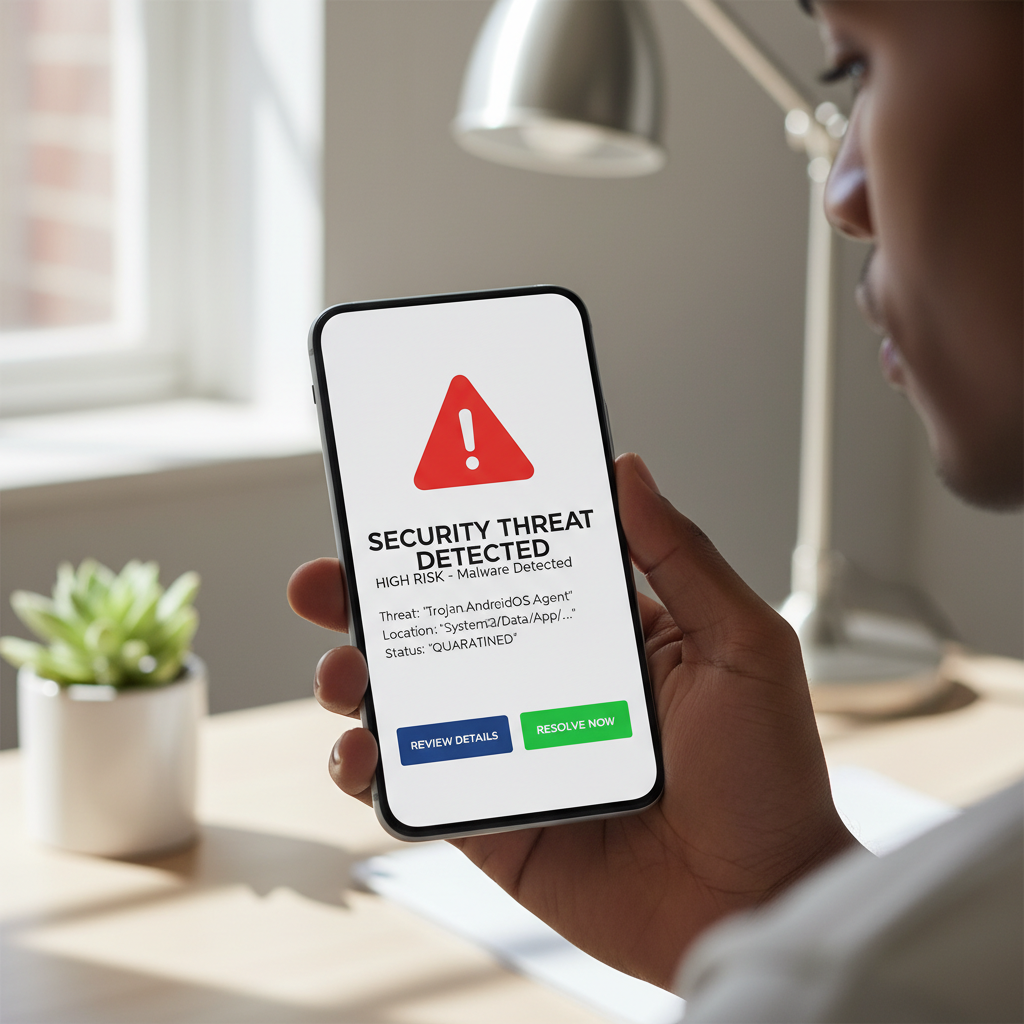
A few years ago, "AI" mostly meant chatbots and photo filters. Now it's built into everything from the antivirus running quietly on my laptop to the scam texts landing in your inbox. When I talk to clients about online safety, this is the question I get asked more than any other: is AI making us safer, or putting us more at risk? Honestly, it's both. The same technology that helps a bank spot a stolen card in milliseconds is also helping a scammer write a flawless phishing email at two in the morning. Understanding how AI cuts both ways is the first step to using it wisely instead of fearing it. It's not a reason to switch everything off and go back to paper, it's a reason to get sharper about which signals still mean something and which ones AI has quietly made worthless.
The New Threats I'm Seeing: Deepfakes and Voice Cloning
The scams I used to warn people about were full of spelling mistakes and dodgy logos. Not anymore. AI tools can now clone a voice from a few seconds of audio lifted off a Facebook video, which means that "urgent call from your grandson" could be entirely fake. I've also come across deepfake video clips used in investment scams, showing well known faces "endorsing" get rich quick schemes that don't exist. The National Cyber Security Centre has been tracking this shift closely, and their advice matches mine: if something involves urgency and money, treat it the same way you'd treat any other AI scam. Pause, verify through a separate channel, and don't act on pressure alone. The audio clips scammers train on don't need to be long either, a voicemail greeting or a short video posted publicly is often enough, which is one more reason I'd think twice about how much voice and video of myself ends up freely available online.
Why Caller ID and Familiar Voices Aren't Proof Anymore
Caller ID used to be a reasonable trust signal, seeing a name you recognise pop up meant something. AI has quietly broken that too, spoofing a number is trivial and doesn't require any special access, and a cloned voice on the other end can sound close enough to fool you in the first few seconds, which is usually all a scammer needs. I don't treat a familiar name or voice as proof of anything anymore, if money or personal details come up, I hang up and call the person back on a number I already have saved, not the one that just rang me.
How AI Is Also Working in Your Favour
It's not all bad news. AI is quietly doing a lot of good work behind the scenes. Your email provider's spam filter, your bank's fraud detection system, and even your phone's built in scam call warnings all lean on machine learning to spot patterns a human would miss. A good password manager like NordPass can flag reused or breached passwords the moment they show up in a leak, and two factor authentication apps use similar pattern recognition to catch suspicious login attempts before they succeed. The tools protecting you have got smarter right alongside the tools trying to catch you out. None of this replaces judgement, but it does mean the odds are better than they used to be, provided you actually turn the tools on and let them do their job.
What This Means for Households and Small Businesses
For local businesses, AI powered scams often arrive as an "urgent" email from a supplier or a cloned voice message pretending to be a director asking for a bank transfer. For households, it's more likely to be a fake delivery text or a cloned voice claiming to be a relative in trouble. Either way, the fix is the same low-tech habit: verify before you act. I always recommend a simple family or team code word for anything involving money over the phone, something an AI clone won't know to say. It costs nothing to set up and takes about two minutes to agree on, but it's one of the few checks a scammer genuinely can't fake their way around.
Teaching the People Around You to Spot This
The people most likely to be caught out by an AI powered scam usually aren't careless; they just haven't been shown what to look for yet. I make a point of walking older relatives and less tech-confident friends through a couple of real examples rather than a list of warnings, since seeing how convincing a cloned voice or a fake video actually sounds does more to change behaviour than being told to be careful. It's a five-minute conversation that tends to stick far longer than any article.
Simple Habits That Still Beat Any Algorithm
You don't need to become a cybersecurity expert to stay ahead of AI powered scams. A password manager, two factor authentication on your important accounts, and a healthy pause before clicking anything urgent will cover you against the vast majority of what's out there. If you want to see the exact tools I use and recommend, my Safety Toolkit page has the lot in one place. And if you've spotted something that looks like an AI scam and you're not sure what to do, get in touch and I'll talk you through it. None of this requires special skill, it just requires slowing down for the ten seconds it takes to check, which is usually all a scam needs you to skip.